
Long Walk

At the age of 38 (the age that I am, for just a little longer) I went backpacking overnight by myself for the first time. For days after returning, I limped around, stepping gingerly down stairs taking small sharp breaths. These legs, for the first few days back, were brimming with pain, and they barely worked. A few days after returning, I threw out my upper back doing something mundane, and I iced it with frozen carrots and peas intended for fried rice until I ordered some proper ice packs online, which then didn’t work as well as the frozen veg, but they did come with a strap to hold them against my back.
Upon returning, thoroughly programmed as I am, I thought about where I might share the experience. My first inclination was to compose a snarky post to LinkedIn about how a grueling 14-mile hike with 3700 feet of elevation gain under a heavy load had taught me nothing about business or leadership or anything, and how I honestly didn’t give a shit if it made me a better person.
It then occurred to me that sharing activities on social media, even snarkily, is often a means through which to put lived experience in service of social capital, and that soured the joke for me. Every post on social media now resembles to me a bid for a commodity —buys something… affinity or affection or followers or attention, abstract social currency which can be subsequently, fungibly put to use in the social marketplace, or perhaps just hoarded to be occasionally exchanged for self-esteem, with rapidly diminishing returns as explodes the rate at which we metabolize validation. Karma farming on Reddit is a clear demonstration of attention commodification, where bots or individuals simply repackage others’ content to harvest upvotes. The content stops being the purpose, the sharing stops being the purpose. Engagement is the purpose. Social media makes a commodity of experience, perhaps even thought, and as we move further into a world where what is shared is subsumed within these logics, I think all of this changes our orientation and posture towards being and towards living.
I believe I would like to live, even when it earns me nothing. To be the tree that falls in the forest with nobody to hear it, self-assured that its collapse was, if not a reality for distant ears, still something, still real. Perhaps this, a post on a weird corner of the internet, is the sound that the tree makes.
And then this reflection, my judgement of the motives of we whose lives are perpetually broadcast into the digital commons, is one of those views that feels perfectly reasonable to aim at my own behavior; and then the second its condemning beam strikes another person, I feel like an asshole. Self-improvement is only self-improvement when it doesn’t catch others up in its improvement scheme. Stoicism and self-discipline aimed at others, at a certain level of intensity becomes abuse.
Perhaps I just think that self-abuse is morally defensible. I was raised within an ascetic religious tradition and I have yet to define or even find signs of a fine line that clearly divides sanctification and self hate.
Know thyself I guess—just remember you don’t know anyone else, and language often splashes off of our targets, somehow getting others wetter than the person beneath the overturned bucket.
And then I ran into that Mary Oliver quote from her poem “sometimes”, on a Facebook group comprised of Mary Oliver fans, which goes
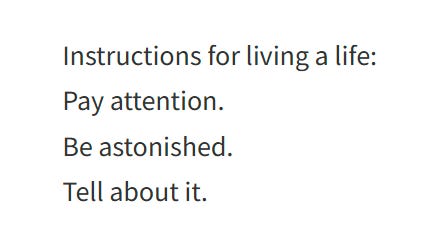
And one rule I have is “listen to Mary Oliver”.
I arrived at the Appalachian Trail trailhead, by the Reeds Gap parking lot just off of Blue Ridge Parkway in Virginia around 6:30pm on Saturday. This was much later than I had planned on arriving, but I got very distracted on the drive over, psychologically ensnared within an REI and then a bookshop in Fredericksburg. I had about 5 or so miles to cover to make it to my goal, the Harper’s Creek shelter on the Appalachian Trail, and it was already late. The sun would go down in just 2 hours, but I had prepared and I was here, so I set out.
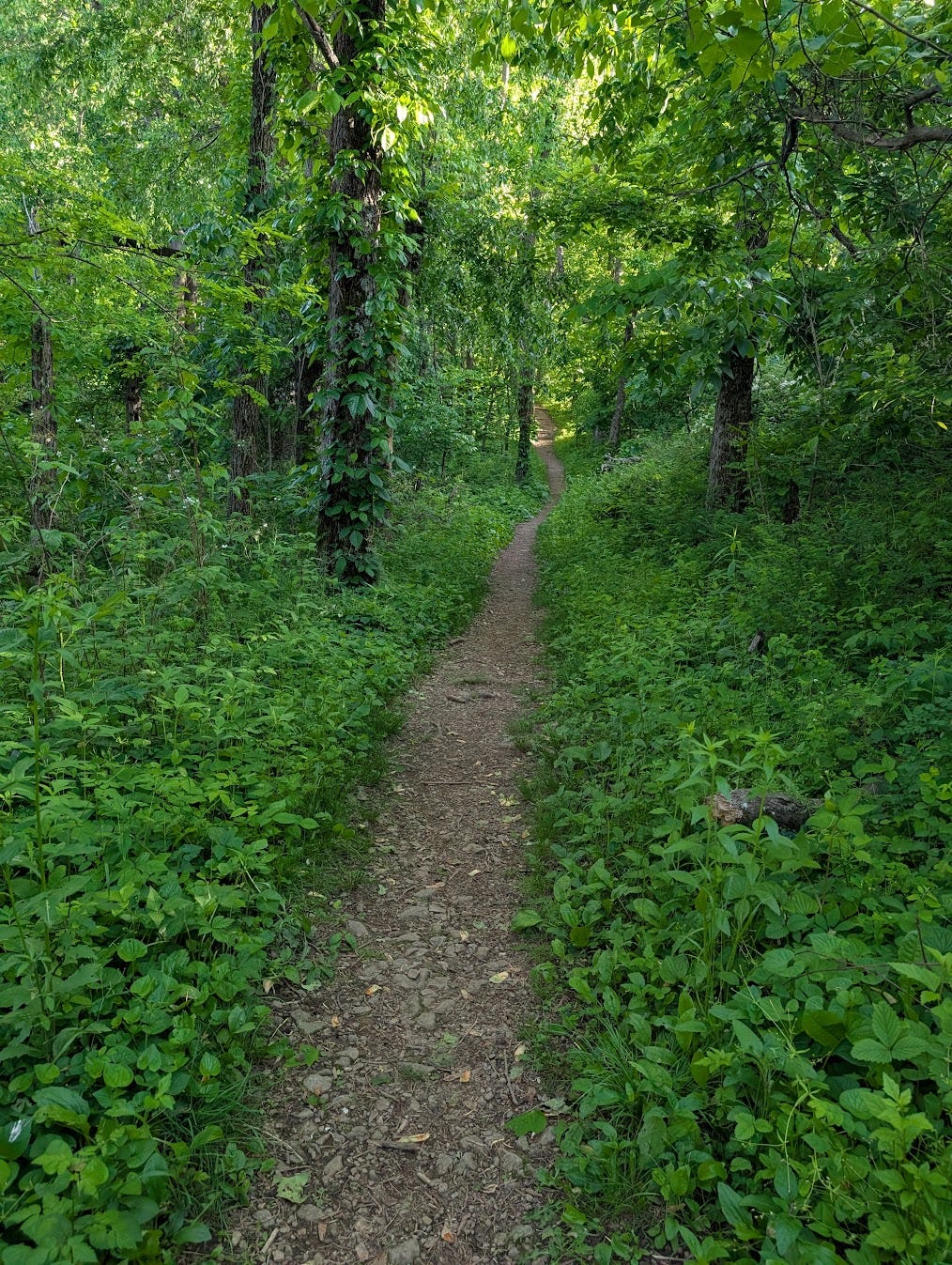
I walked, under medium load, through the beautiful woods of George Washington National Forest. I experienced many small things over several hours: delight, fascination, exhaustion, curiosity, and feelings that I think can’t be put to words. For the most part I just looked and moved. I didn’t piece things together or gain insights or grow or much of anything really. I just walked and existed in one place after another after another. These hours brought me back to that state I existed in for much of my childhood, walking entranced through redwood forest alone for hours and hours and hours by myself—not ecstatic, not miserable, but present at times, and fully detached at others. A walking meditation. Mind like water.
I carried my camera on a Peak Design capture clip on my chest, and an extra lens in one of the pockets on my backpack’s hip belt. None of my pictures from my camera really turned out. The phone got better shots.
Taking pictures is a way that I attend to things. It’s not very ultra-light of me to carry a 1.5 pound device just for occasionally paying attention to parts of the world, but neither is it particularly optimizing to walk in a 14 mile circle under a heavy load and sleep on the ground and eat dehydrated food.
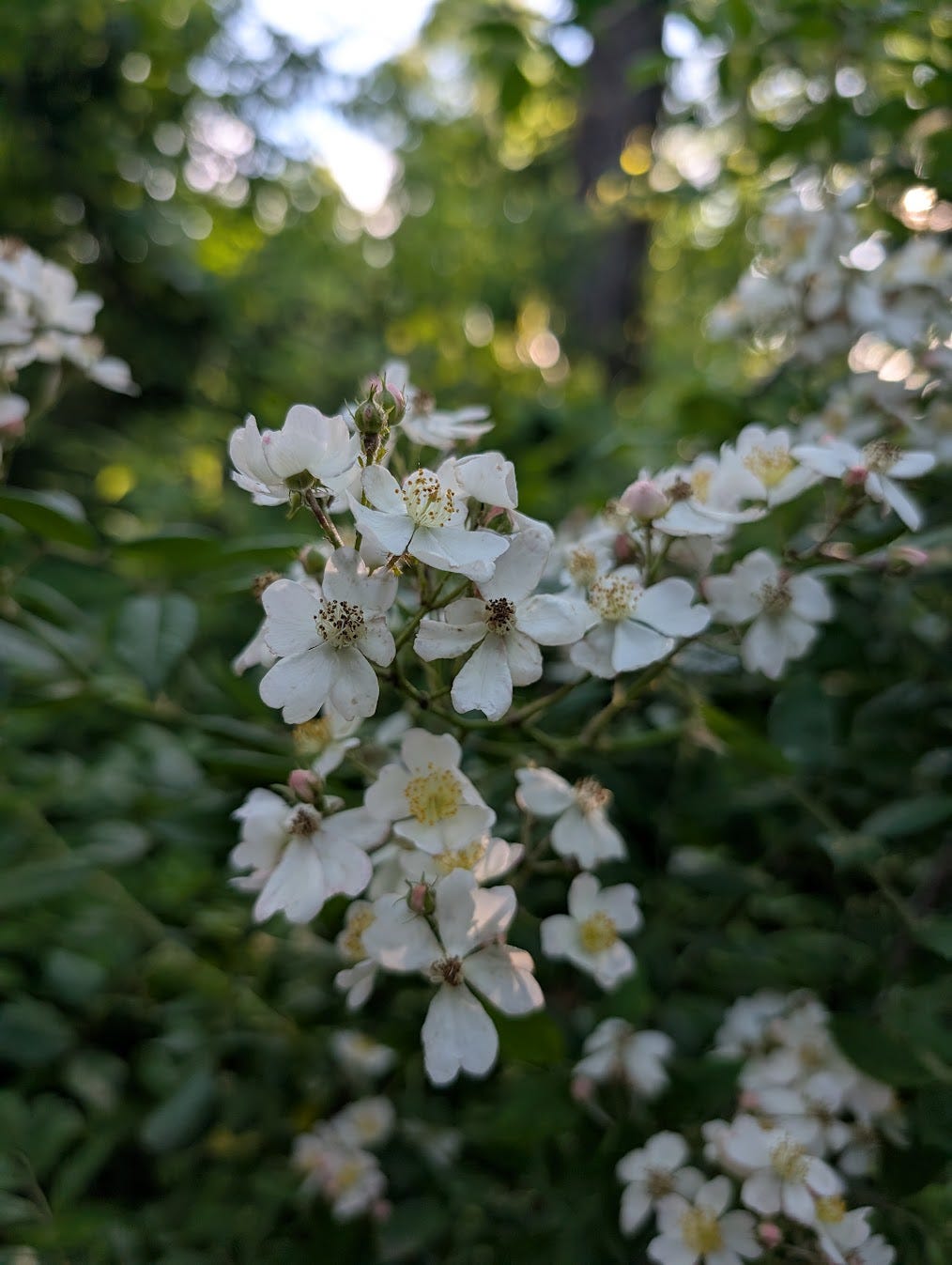
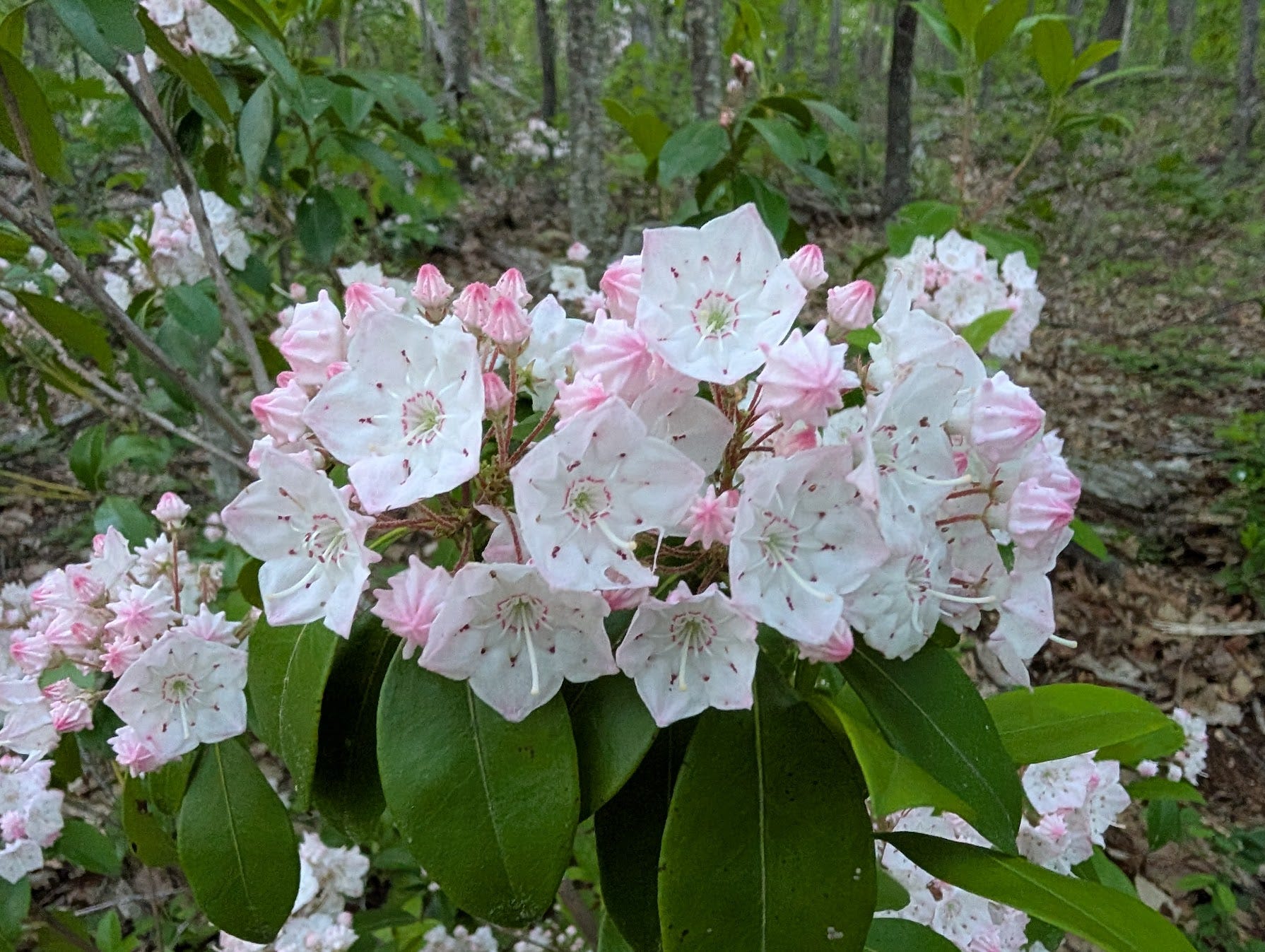
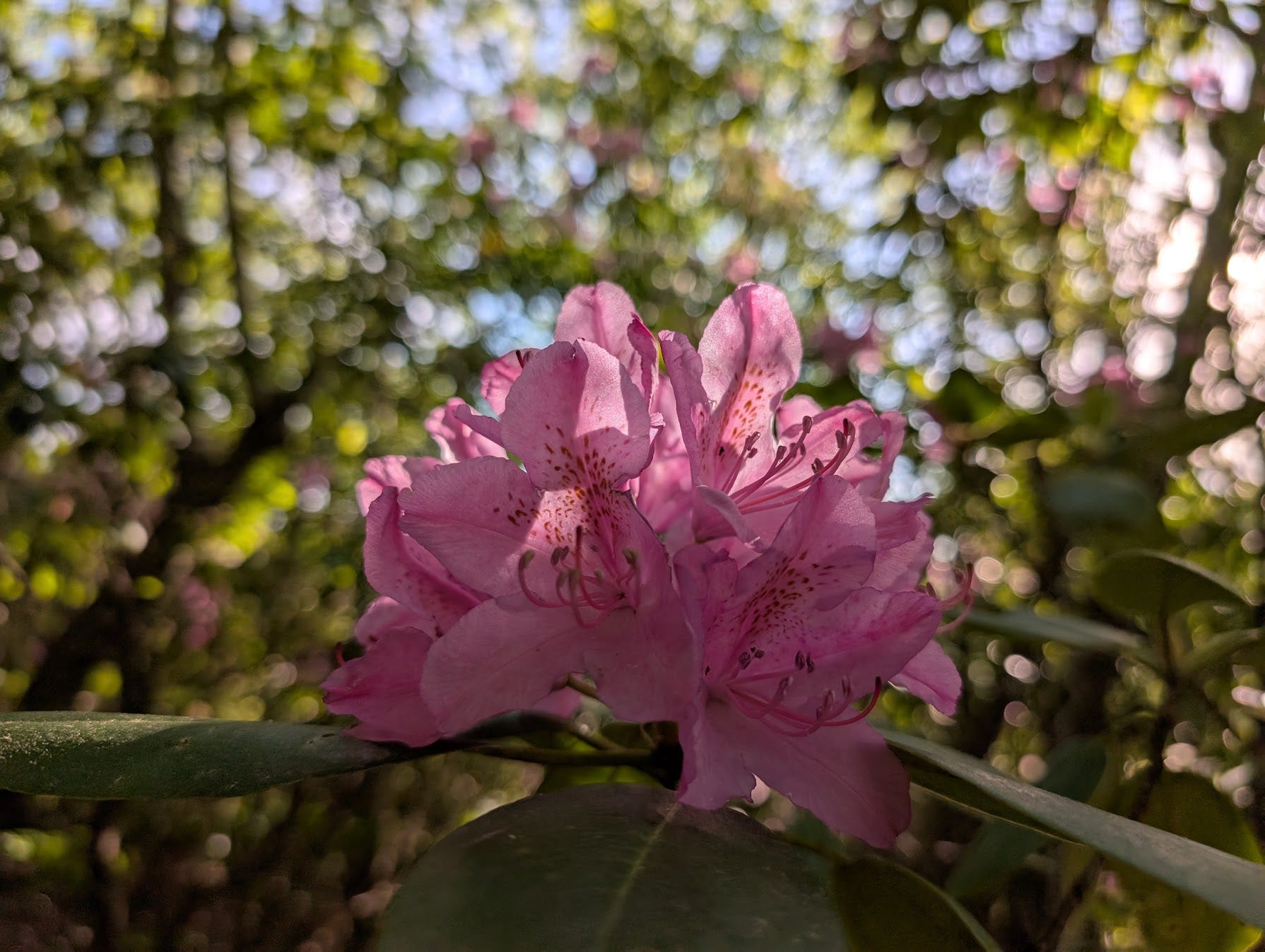
The quiet woods were filled with flowers.
I love river crossings and little tiny cascading waterfalls, and there were many on the Mau-Har trail, which follows Campbell Creek, departing from the Appalachian Trail at Maupin Field Shelter and reuniting with it at Harpers Creek shelter (giving the trail its funny name, the first three letters of each shelter name).
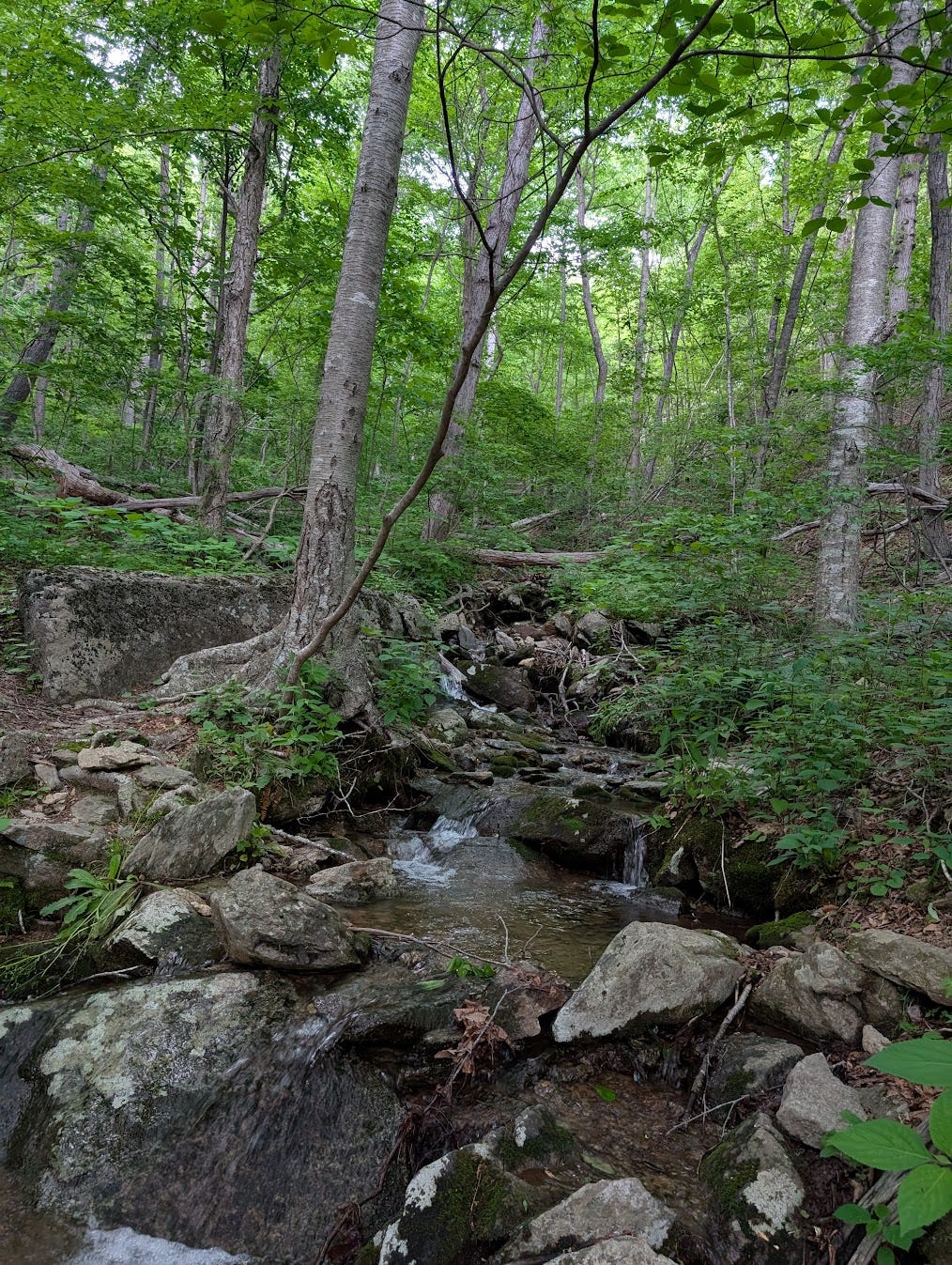
As I walked, I passed other walkers who had set up camp near the river. Some hailed and waved from beside their fires or sat up in swinging hammocks smiling as I passed in the evening; and the greetings felt warm. The mood was uplifting. Miles from our places of work and obligations, temporary refugees from civilization…
I have been in a state of traumatized mourning for almost a year now… or perhaps for several years…
The sun went down over the Blue Ridge Mountains. The light in the forest took on a warm hue. I stopped to take a picture of insect-bitten leaves with warm colors poking through.
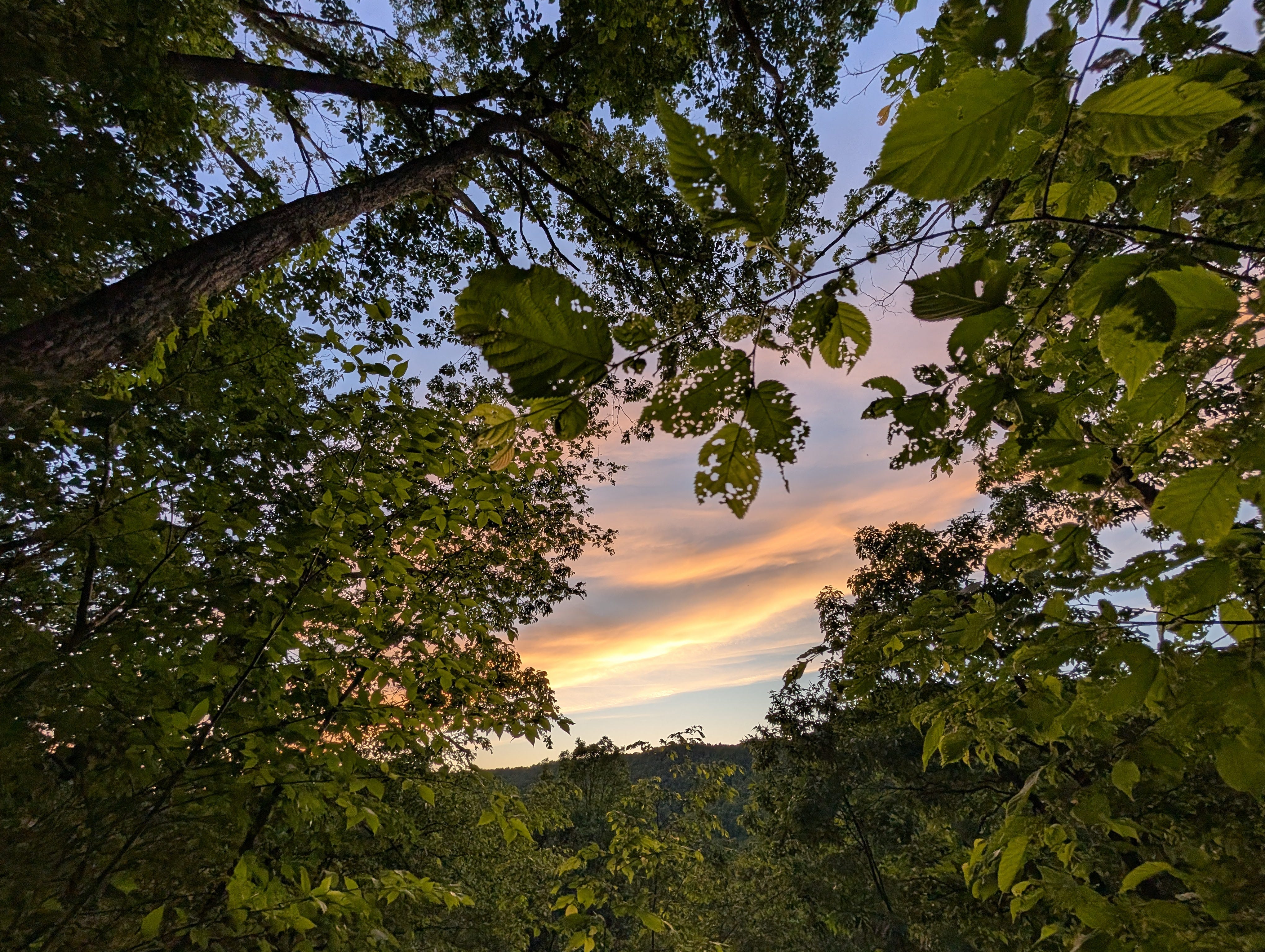
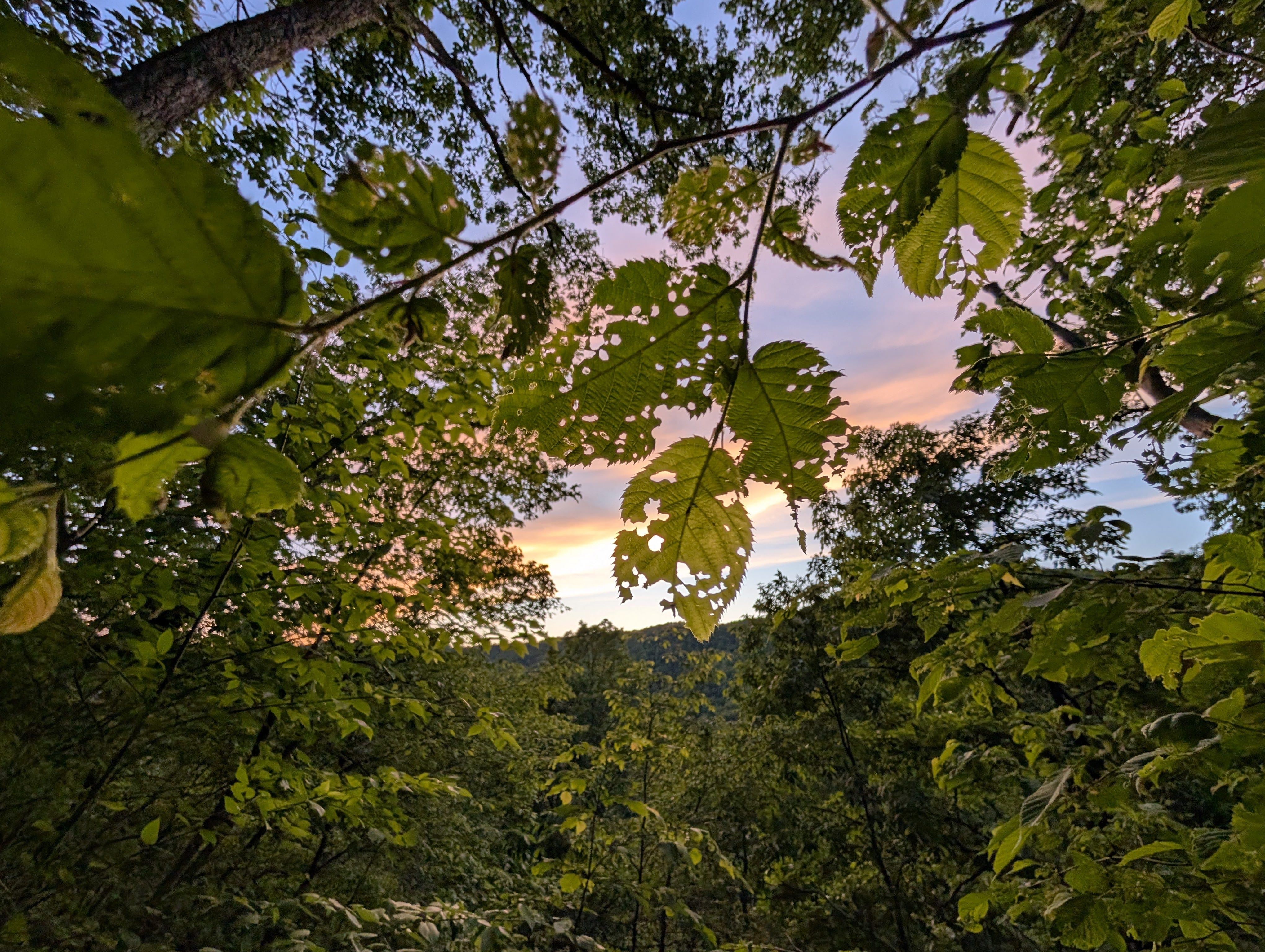
And then as I climbed another steep slope, the sun went down, and I still had several hours to go.
Soon I was hiking in the absolute dark, tired but energized by the drama of navigating a thin trail through dark woods with a dim headlamp. Surrounded by sounds, feeling very much alone and yet thoroughly accompanied by the thronging, spirited forest.
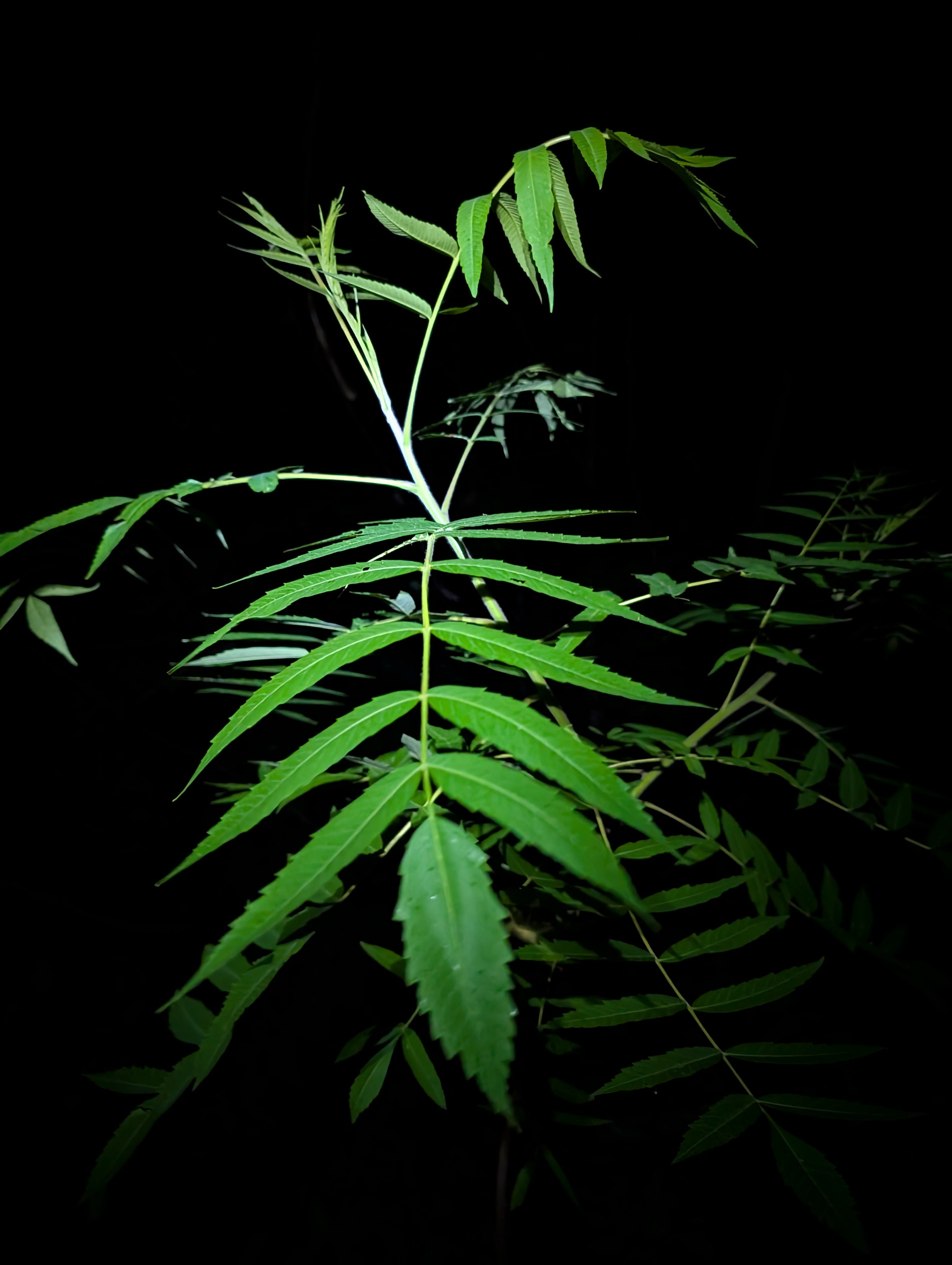
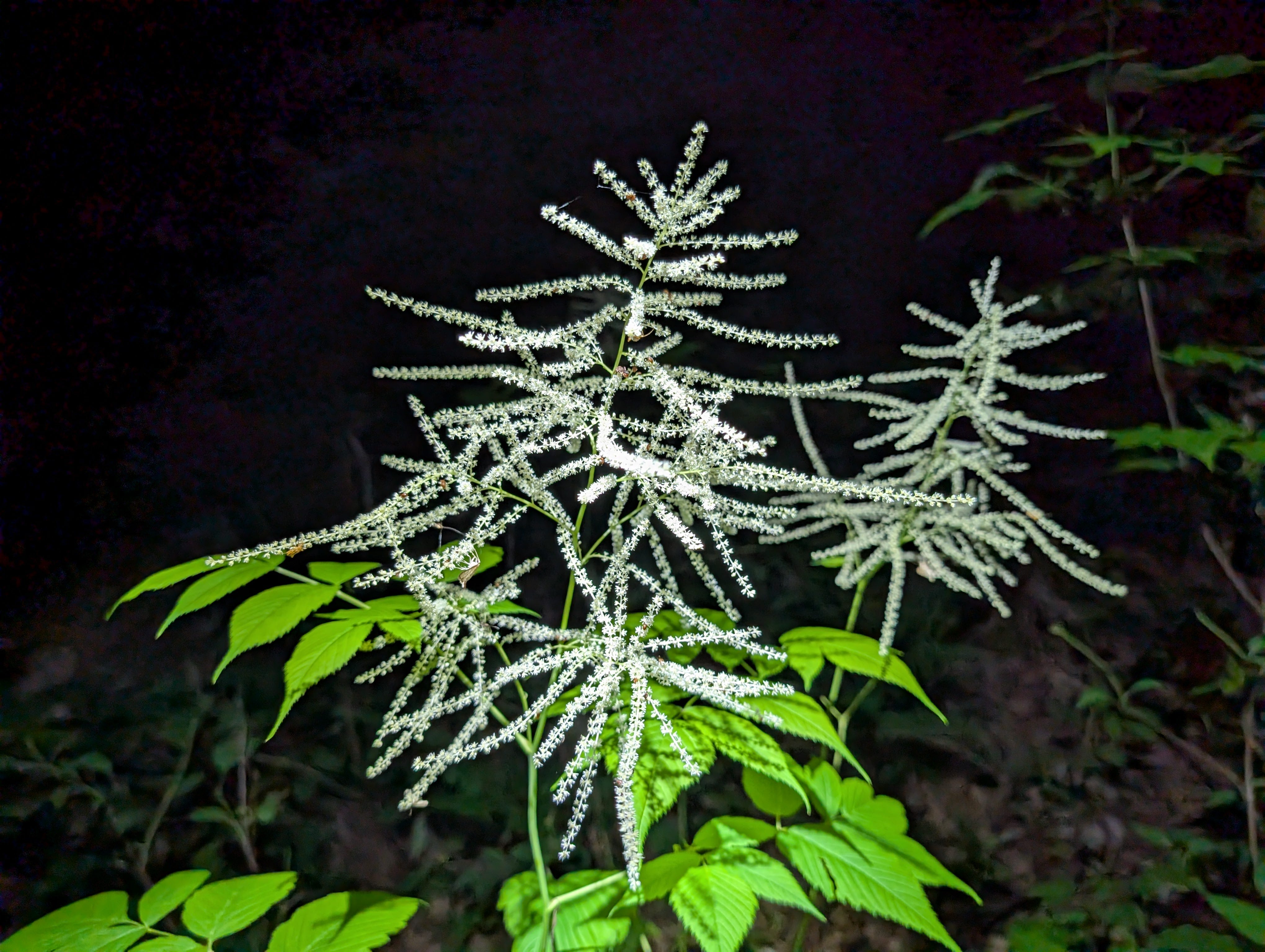
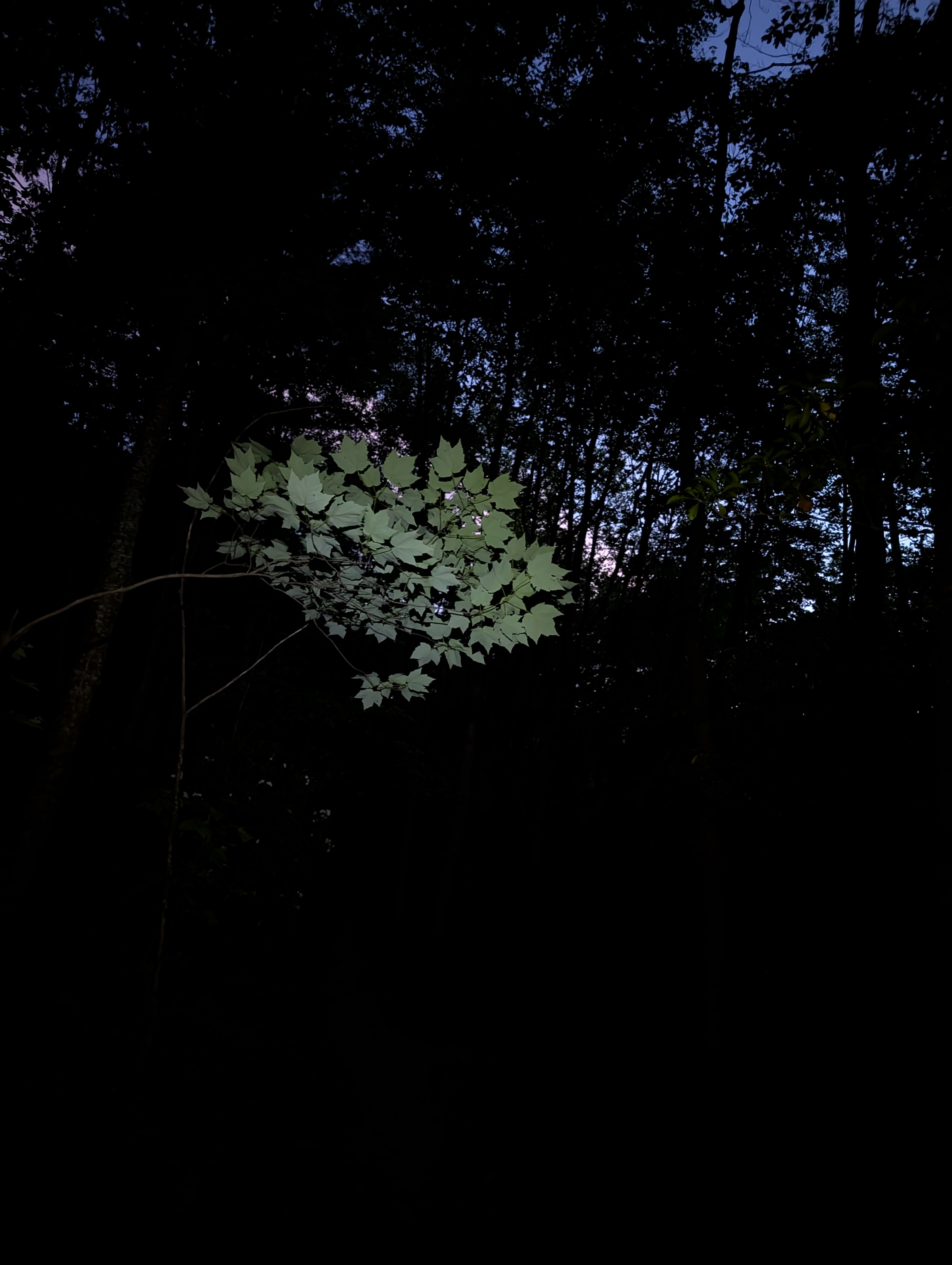
A few hours into the darkness, I imagined a stump leaning out over the trail was the head of a wolf and my heart stuttered. I walked alert and physically spent. I walked a mile and a half further than I had expected, and it was almost 11pm when I finally found a spot to set up my tent near Harper’s Creek shelter. I ate, hung up my bear bag, drank the whisky I’d packed, and slept deeply, immersed in the woods, swimming in the sounds of the creek and the forest.
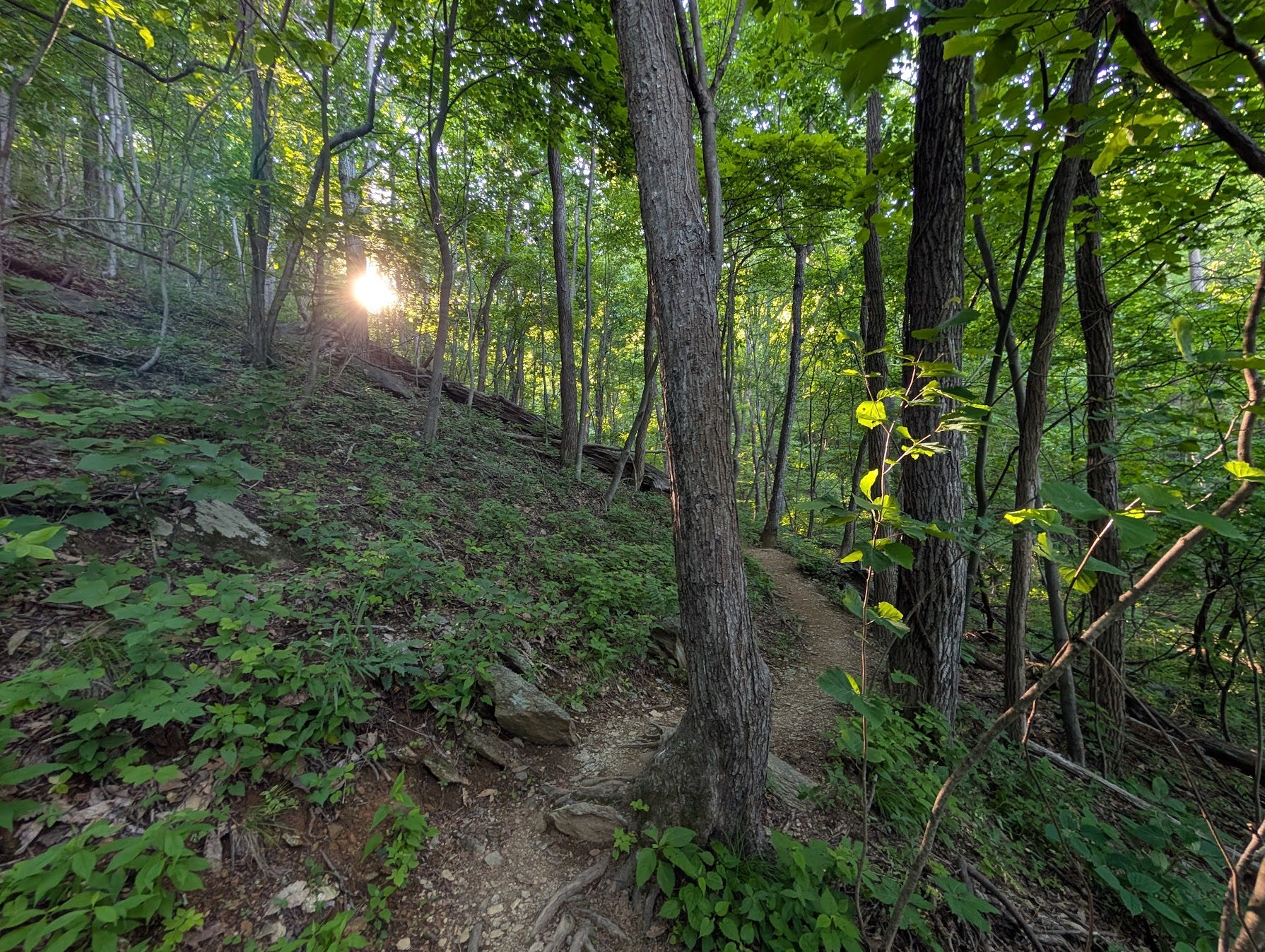
The next morning was lovely and serene.
I thought of Emily Dickinson’s phrase there’s a certain slant of light as I walked, though she was referring to an oppressive slant of light, and this was not that, at least not until hours later when I had climbed a few thousand feet in a short distance and run out of water, having neglected to filter enough from Harper’s Creek.
Losing steam and concerned about dehydration, I took plenty of breaks, and walked methodically, sometimes counting ten steps and then standing still for ten seconds and then counting ten steps and then standing still…
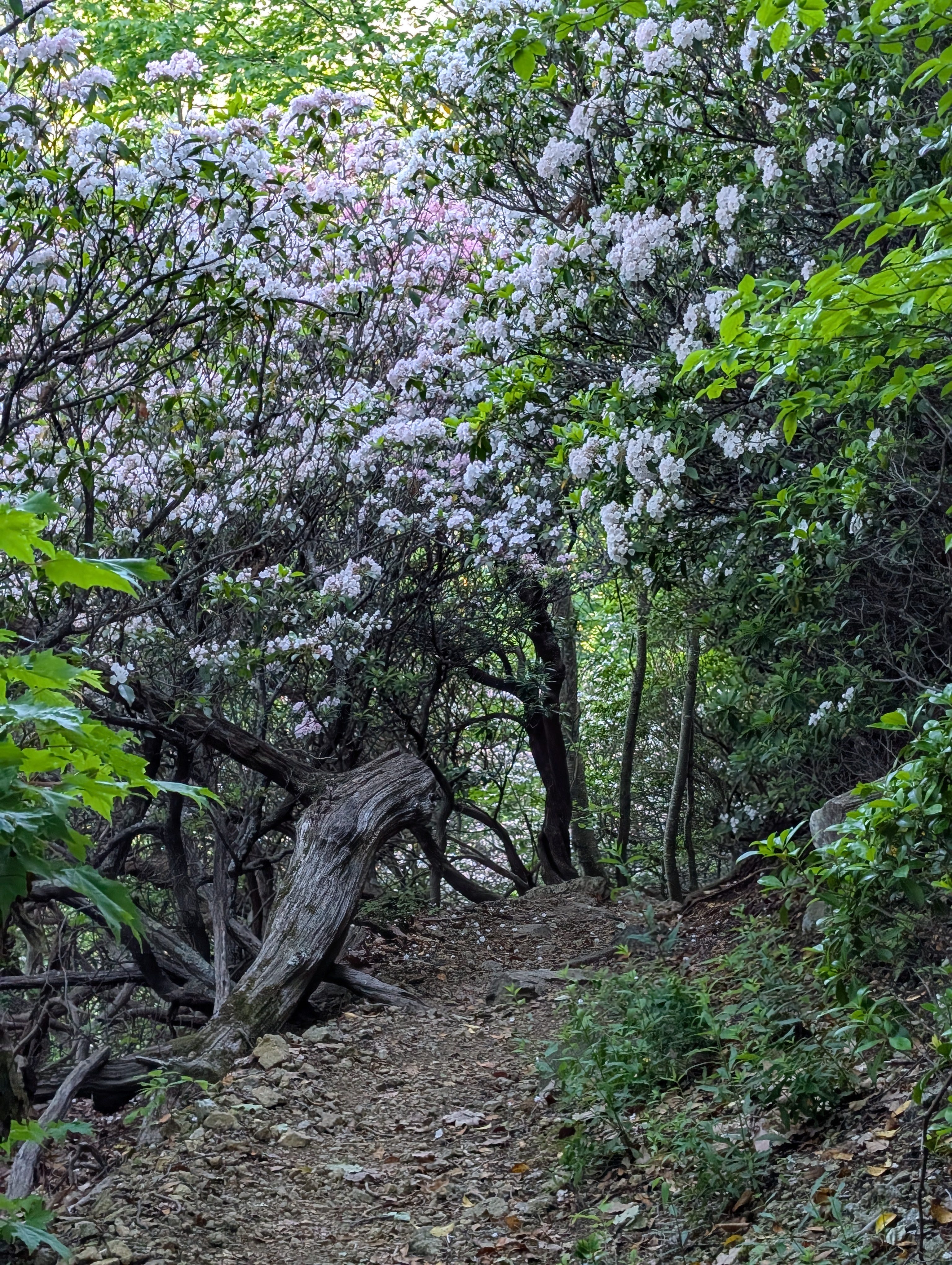
Sometimes the trail went under a tunnel of fragrant flowers.
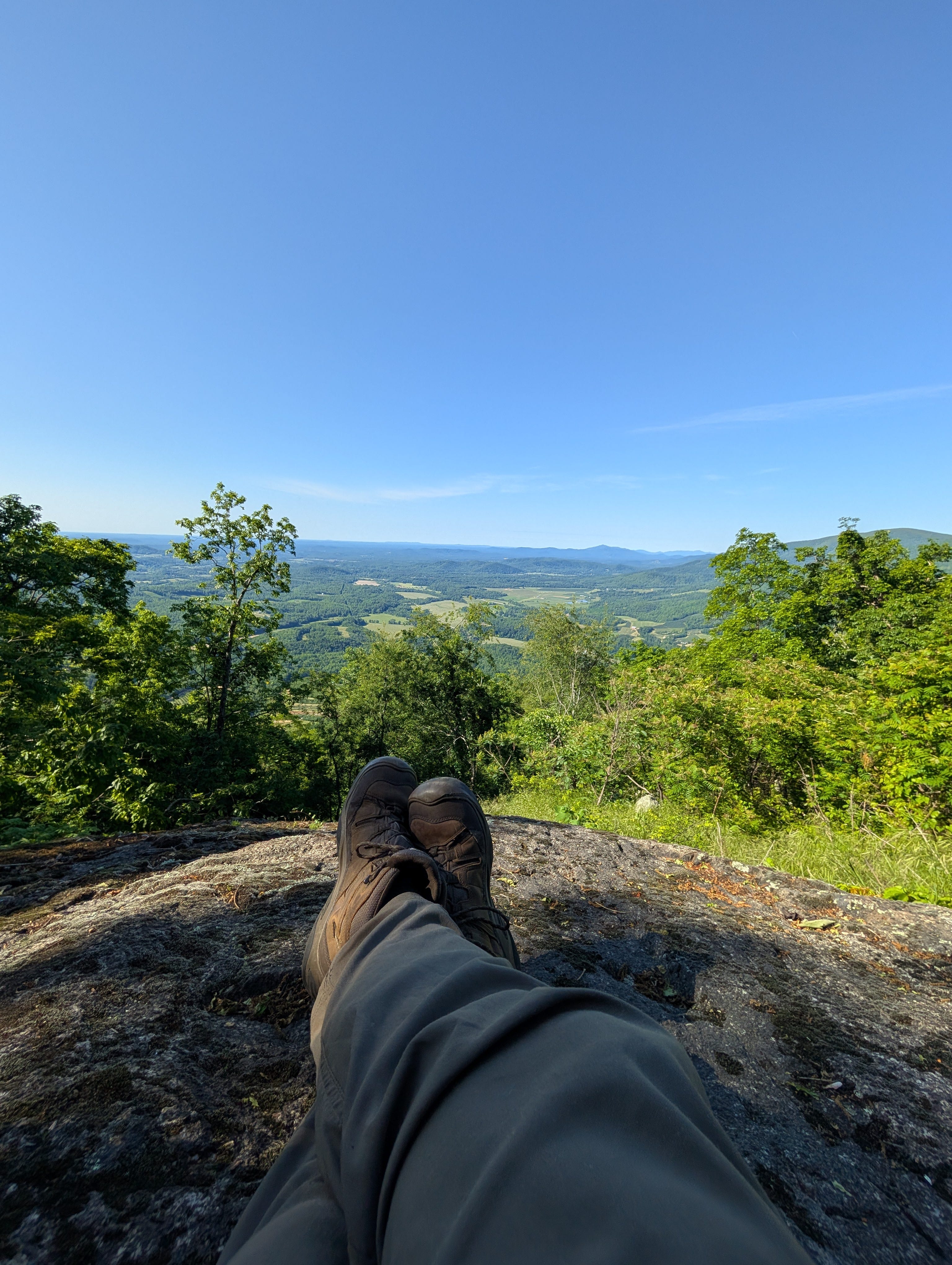
and then sometimes it opened up into majestic vistas
On my hike that weekend, I thought a lot about Jeff Vandermeer’s 2014 book “Annihilation”, a suffocating, confusing botanical horror, part of the Southern Reach series which had him labeled “The Weird Thoreau” in a New Yorker review. I read Annihilation this year because I loved the 2018 film starring Natalie Portman. Both film and book captured this visceral, exciting sense of nature that I experienced constantly as a child stumbling through old growth forests, walking up and down frothing creekbeds. A feeling that I got to return to for moments that night, stumbling bleary through the crowded darkness—the sense that something vast and ancient, beautiful and terrifying breathes into and animates this expansive web of organic stuff, distinct biological expressions integrated into something awesome which can vitalize and kill you, both at once, which we too can become immersed and entangled in, can become part of—or perhaps cannot avoid being part of no matter how hard we try. And that’s why going into the woods can feel weirdly like coming home.
Wow Daniel, I loved this. The narrative and the photos combined to make a beautiful and intriguing story of your journey, and the memories that it invoked. I am glad you got away from the concrete world for a step back into nature. I share that love of the wilderness, and used to make such treks in my younger days. It's good for our souls to step away occasionally and be free.
Marty